Gutters are one of those home systems that homeowners often forget about until water starts pooling on the roof or foundation cracks appear. Gutter cleaning isn’t glamorous, but it’s one of the most cost-effective maintenance tasks you can do to protect your home’s structure and foundation. If you’re trying to budget for gutter maintenance, you’re probably wondering what the average gutter cleaning cost actually is in 2026. The answer depends on several factors, your home’s size, location, how much debris has accumulated, and whether you hire a professional or handle it yourself. Understanding these variables helps you make a smarter financial decision and avoid overpaying or, conversely, cutting corners on a task that protects thousands of dollars in property value.
Table of Contents
ToggleKey Takeaways
- The average price for gutter cleaning in 2026 ranges from $150 to $350 for single-story homes, with costs varying by region, home size, and local labor rates.
- Gutter cleaning costs are typically charged at $0.75 to $1.50 per linear foot, though debris buildup, roof accessibility, and gutter condition can increase prices by 20–40%.
- DIY gutter cleaning saves $300–$700 annually but carries significant safety risks; a hybrid approach of professional cleaning every 2–3 years combined with seasonal maintenance offers the best value.
- Professional gutter cleaning is essential for steep roofs over 6/12 slope, homes taller than two stories, or when damage, standing water, or pest activity is discovered.
- Consistent annual gutter maintenance prevents costly foundation damage, rot, and pest problems that far exceed the cost of regular professional or DIY cleaning.
Typical Gutter Cleaning Prices by Region and Home Size
Professional gutter cleaning costs vary widely across North America. In 2026, the national average sits between $150 and $350 for a single-story home, though regional factors push this higher in some markets and lower in others.
For a single-story home with 150–200 linear feet of gutters, you’re typically looking at $100 to $200. A two-story house with 200–250 linear feet runs $200 to $350. Homes with three stories or complex roof lines can reach $350 to $600+. These are baseline figures: your actual quote will depend on local labor rates, demand, and gutter condition.
Regional variation is significant. East Coast and Pacific Northwest homes often see higher prices due to denser tree coverage, moisture, and higher regional labor costs. The Midwest and Southwest tend to run 15–25% cheaper because there’s less debris accumulation (desert regions) or the local market is more competitive. Coastal areas hit the high end because salt spray and moisture accelerate gutter deterioration, often requiring inspection for damage during cleaning.
Most professionals charge either a flat rate or a per-linear-foot rate of $0.75 to $1.50 per foot. If a contractor quotes significantly outside this range, ask why, whether it’s due to gutter damage, extreme debris buildup, or accessibility challenges.
Factors That Affect Gutter Cleaning Costs
Not all gutter-cleaning jobs are created equal. Several factors can bump your cost up, sometimes dramatically, or keep it low.
Debris Buildup and Accessibility
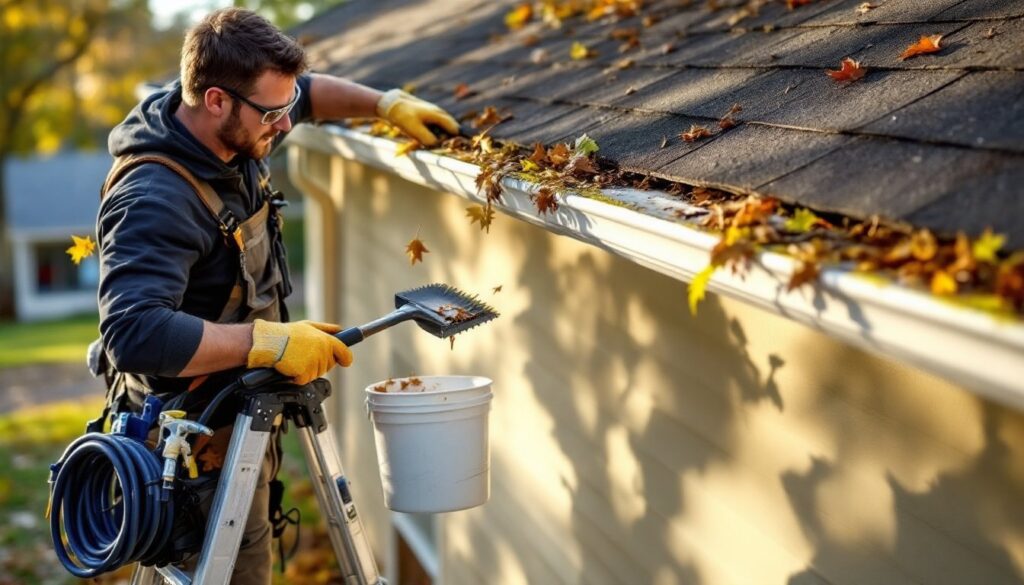
The more debris in your gutters, the longer the job takes. Light leaf litter (what you’d expect once a year in an average neighborhood) usually falls into the base price. Heavy accumulation, matted leaves, branches, sediment, and pine needles, costs more because it requires more time and sometimes a wet/dry vacuum or power washing.
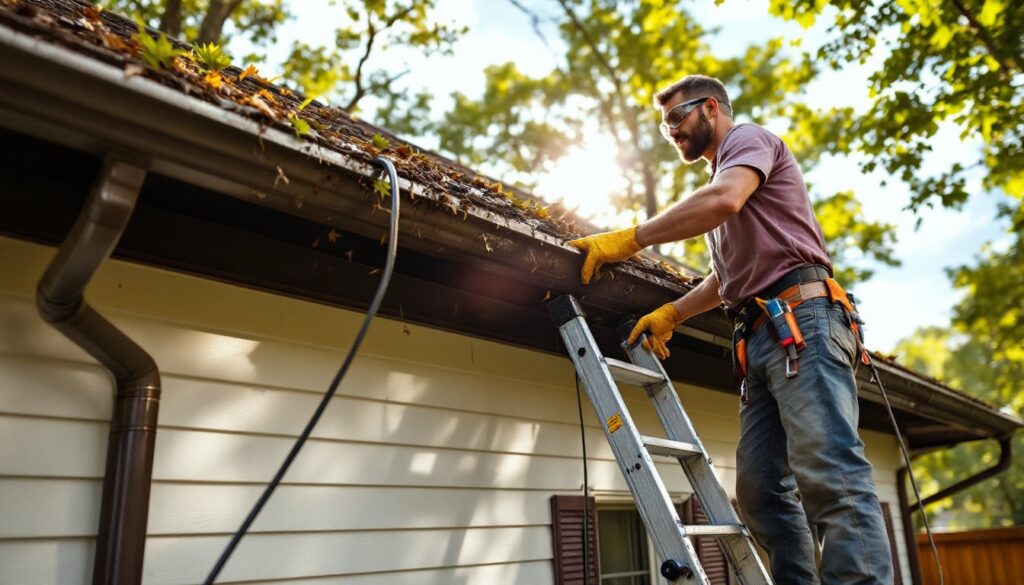
Accessibility matters too. A ranch-style home with a walkable roof pitch? Fast and cheap. A house surrounded by mature oak trees on a steep roof with limited roof access? Expect to pay 20–40% more. Contractors need safe access via ladder placement, and some homes require multiple ladder repositioning or even boom lifts for safety. If your gutters are heavily corroded, sagging, or have loose fasteners, the cleaner has to slow down to avoid causing damage.
Gutter Condition and Damage
If you ask for “cleaning only,” you’re paying the base rate. But if the job reveals damaged sections, holes, rust-through, separated seams, most contractors will flag it and upsell repairs. A simple reseal of loose fasteners or flashing adds $100 to $200. Gutter patching or small section replacement runs $300 to $800. Full gutter replacement ($1,500–$5,000+ depending on material and home size) is a separate job, but honest pros will mention it if your gutters are near the end of their life.
Standing water or rotted soffit indicates underlying problems. If the cleaner discovers a downspout clog or a disconnected underground drain line, that’s another service call. This is why getting a reputable contractor matters, you want someone who diagnoses honestly rather than overselling repairs you don’t need.
DIY vs. Professional Gutter Cleaning: Cost Comparison
Thinking of climbing a ladder yourself? The out-of-pocket cost is low, but so is the hidden cost of your time and risk.
DIY costs break down like this:
- Ladder (if you don’t own one): $50–$200 (one-time expense)
- Work gloves, gutter scoop, and handheld tools: $15–$40
- Wet/dry vacuum (optional but helpful): $50–$150
- Safety gear (gloves, eye protection, dust mask): $20–$50
- Your time: 2–6 hours per cleaning session, depending on home size and debris load
Total DIY investment: $135–$440 upfront, plus your labor. If you need to clean gutters twice yearly (common in tree-heavy regions), you save roughly $300–$700 per year versus hiring a pro.
But, DIY comes with real risks. Falls from ladders are the leading cause of emergency-room visits for homeowners. Insurance doesn’t cover ladder injuries on residential projects in many cases. You might also miss damage behind the debris or fail to flush the system properly, leaving standing water that leads to rot or pest issues.
Many homeowners take a hybrid approach: hire professionals every 2–3 years for a thorough inspection and heavy cleaning, then do light maintenance (a quick scoop in fall) themselves. This costs $300–$500 annually but reduces accident risk and catches problems early. Sites like HomeAdvisor and Angi let you compare local contractor quotes so you understand what pros are actually charging near you.
When to Call a Professional
There are moments when DIY isn’t just less convenient, it’s genuinely unsafe or likely to cause more damage than the cleaning prevents.
Call a professional if:
- Your roof pitch is steep (over 6/12 slope) or your home is taller than two stories. Ladder stability becomes a serious hazard, and mistakes cascade quickly.
- You’re older than 65, have mobility issues, or no recent experience on ladders. Risk-reward math changes fast when a simple slip could mean broken bones.
- You’ve discovered standing water, rot, or pest activity in your soffit or fascia. These need professional diagnosis and repair, not just cleaning.
- Your gutters are sagging, pulling away from the house, or leaking at seams. A thorough inspection under load is safer in pro hands.
- You own a gutterless home system or specialty gutters (copper, fasciaguard, half-round). Some require specialized cleaning to avoid damage.
- Your home sits under dense tree cover or near shrubs. Pest nests (wasp, hornet) sometimes hide in gutters, and pros know how to handle them safely.
Contractors carry insurance and liability coverage. If something goes wrong, a damaged roof, gutter, or worse, they’re responsible. That peace of mind often justifies the $200–$400 cost for a single professional cleaning. ImproveNet offers project planning tools and contractor resources to help you vet pros before booking.
Conclusion
Gutter cleaning costs between $150 and $350 for most homes in 2026, but your final bill depends on your location, home size, gutter condition, and debris load. Smart homeowners weigh the cost of professional cleaning against their own labor, time, and safety. Whether you hire out or DIY, the key is consistency, clean gutters at least once a year, more often if you’re surrounded by trees. Ignoring the job costs far more in foundation damage, rot, and pest problems down the road.