Gutters are one of those parts of your home that’s easy to forget about until you spot water pouring over the edge during the next rainstorm. If you’re a homeowner in Renton, WA, keeping your gutters clean is essential, the region’s frequent rain and heavy leaf fall mean buildup happens fast. A clogged gutter can lead to water damage, foundation issues, and expensive repairs down the road. The good news? Gutter cleaning is straightforward enough to tackle yourself with the right tools and safety setup. This guide walks you through everything you need to know to keep your gutters flowing freely.
Table of Contents
ToggleKey Takeaways
- Regular gutter cleaning in Renton prevents water damage, foundation erosion, and costly repairs by ensuring proper drainage during the region’s frequent rainstorms.
- Clean your gutters at least twice yearly—once in late fall and again in spring—or more often if large trees surround your home and increase leaf buildup.
- Use a stabilizer bar on your ladder, wear safety gear, and position the ladder correctly to prevent accidents; never rest it directly against the gutter itself.
- Clear gutters section by section, flush with a hose to remove sediment, and check downspouts for blockages that can defeat the entire cleaning job.
- Install gutter guards, trim overhanging branches 6–10 feet away from your roof, and extend downspouts 4–6 feet from your foundation to reduce debris and protect your home’s structure.
- Call a professional gutter cleaning contractor in Renton if your home is three stories tall, has complex roof shapes, or gutters that are unsafe to reach or show signs of rust and structural damage.
Why Regular Gutter Cleaning Matters
Water pooling behind clogged gutters can saturate your fascia board (the trim that runs along the roofline), leading to wood rot and structural damage. Standing water also becomes a breeding ground for insects and mold, both of which spread quickly in Renton’s moist climate. Beyond aesthetics, proper drainage protects your foundation, water cascading off the edge of gutters instead of flowing through downspouts can erode soil and create cracks in your foundation walls.
Most gutters should be cleaned at least twice a year: once in late fall after leaves drop, and again in spring to clear winter debris and pollen. If you have large trees nearby or live in a particularly leafy area of Renton, three or four cleanings per year may be necessary. Regular maintenance also extends the life of your gutter system itself, preventing the weight of debris from sagging or pulling gutters away from the fascia.
Tools And Materials You’ll Need
Gather these items before you start:
Safety gear:
- Work gloves (leather or nitrile, depending on debris)
- Safety glasses or goggles
- Slip-resistant shoes or work boots
- Optional: dust mask if you’re sensitive to mold or pollen
Climbing and access:
- 20- or 24-foot extension ladder (test stability on level ground first)
- Stabilizer bar or ladder standoff (prevents gutters from denting under pressure)
- Optional: rope to secure the ladder to a fixed anchor
Cleaning tools:
- Gutter scoop (curved, shovel-like tool designed for gutters, cheaper and more effective than a putty knife)
- 5-gallon bucket with a hook that fits over the gutter edge
- Garden hose with spray nozzle
- Small hand brush or old toothbrush for tight corners
Optional additions:
- Leaf blower (cordless works well for clearing tops of gutters)
- Wet/dry shop vacuum with extension attachment
- Headlamp or clip-on flashlight (gutters are often shadowy)
Don’t skip the stabilizer bar, it’s inexpensive and prevents your ladder from sliding sideways or puncturing the gutter.
Step-By-Step Gutter Cleaning Process
Safety First: Setting Up Your Ladder
- Choose level ground. Set your ladder on flat, solid footing, grass or dirt can settle unevenly. If your yard slopes, place shims or blocks under the lower leg.
- Position the ladder at the correct angle. The base should be 1 foot away from the wall for every 4 feet of height (a 20-foot ladder goes 5 feet out). This prevents the ladder from tipping backward.
- Attach the stabilizer bar. This U-shaped bracket bolts to the top of the ladder and sits against the fascia board, keeping the ladder roughly 12 inches away from the house and preventing it from sliding. Never rest the ladder directly against the gutter itself, your full body weight will dent or bend it.
- Wear your safety gear. Gloves and glasses are non-negotiable: debris and bird droppings are common in gutters.
- Have someone spot you. A second person can hold the ladder steady and pass tools up, reducing how many times you climb down.
Removing Debris And Buildup
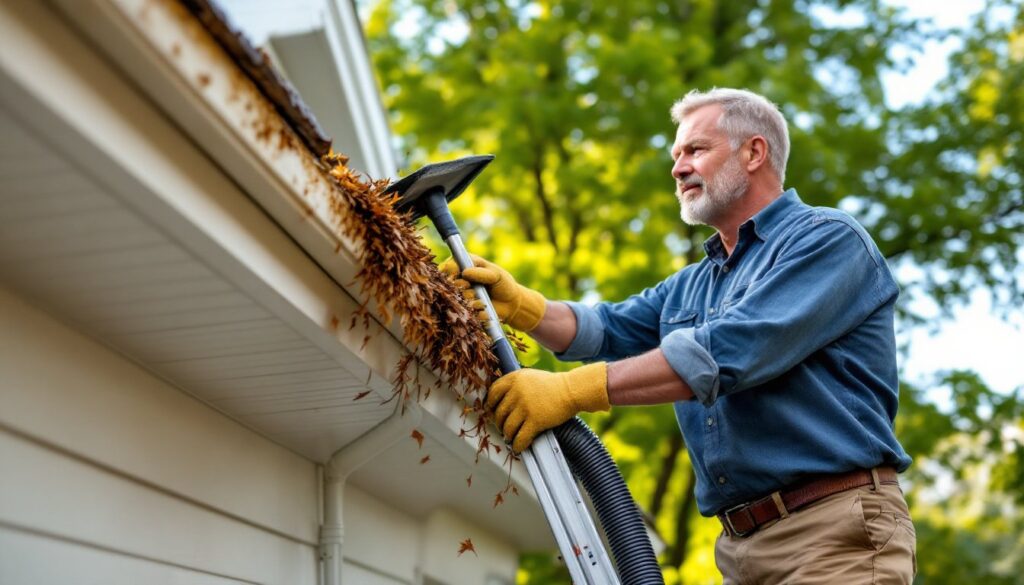
- Scoop out large debris. Using a gutter scoop, remove leaves, twigs, and matted buildup by hand. Work from the downspout end toward the far end of the gutter section, scooping into your bucket as you go. This keeps debris from traveling down and clogging the downspout immediately.
- Work section by section. Clean one 8–10 foot section completely before moving the ladder. Resist the urge to lean sideways, reposition the ladder instead.
- Check downspouts. Once the gutter is clear, water should flow easily toward the downspout. If it doesn’t, the downspout itself may be blocked. Run water from your hose down the gutter to test flow. If water backs up, disconnect the downspout at the bottom and clear it with a plumbing snake or by running a hose up from below.
- Flush the gutter. Use your garden hose with a spray nozzle to rinse out fine sediment and leaves the scoop missed. Start at the far end from the downspout and work toward it, letting water carry debris along. Watch for leaks at joints or seams as water flows.
- Inspect for damage. While the gutter is wet and visible, look for holes, rust spots, or places where the gutter has pulled away from the fascia. Small holes can be patched with gutter sealant: larger issues may require professional repair or replacement.
- Clean out downspouts one more time. After flushing, disconnect the downspout again and run water through it to ensure it’s completely clear. A clogged downspout defeats the whole job.
Preventing Future Gutter Problems In Renton
Once your gutters are clean, a few preventive steps reduce how often you’ll need to repeat this chore. Gutter guards (screens or mesh that sit on top of the gutter) reduce debris entry, though they require occasional cleaning too, they’re not a complete solution. Install them properly so water still flows freely and debris doesn’t pile up on top.
Trim tree branches hanging over your roof by 6–10 feet if possible. This cuts down on leaf fall and reduces the weight of wet debris in your gutters. In Renton’s rainy climate, that extra weight matters, sagging gutters pull away from the fascia and create gaps where water escapes.
Ensure your downspouts extend at least 4–6 feet away from your foundation. If they dump water right next to the house, it will soak the soil and eventually compromise your foundation. You can use gutter extensions (rigid or flexible pipes) to direct water further away.
Check gutters after heavy storms, even if you’ve just cleaned them. Wind can blow debris in quickly, and spotting clogs early prevents overflow damage. Many homeowners in Renton find that a post-storm quick look saves major headaches.
When To Call A Professional
Gutter cleaning is a DIY-friendly project, but some situations call for professional help. If your home is three stories tall, has a complex roof shape, or gutters you can’t safely reach, hire someone. A fall from height is serious, it’s not worth the risk.
If your gutters have widespread rust, holes, or have pulled significantly away from the fascia, professional repair or replacement is safer than patching. Structural issues like these affect how water drains and may violate local building codes in Renton. Professionals have specialized equipment (harnesses, commercial-grade ladder setups, scaffolding) and insurance if something goes wrong.
You’ll also want professional help if you discover water pooling inside the gutter near downspouts, this usually means the gutter has settled or lost its pitch and requires realignment. A directory of highly-rated local gutter cleaning professionals in Renton, WA can connect you with licensed contractors. For cost guidance, resources like HomeAdvisor and ImproveNet provide estimates and project planning tools so you understand what to expect before calling a pro. If you’re uncertain about any part of the process, it’s better to ask a professional than risk falling or causing more damage.
Final Takeaway
Regular gutter cleaning is one of the easiest home maintenance tasks you can do to prevent expensive damage. With a solid ladder setup, the right tools, and a methodical approach, you’ll keep water flowing properly and protect your home’s foundation and structure. Clean your gutters twice yearly in Renton, inspect after storms, and don’t hesitate to call in professionals when the job feels unsafe or beyond your comfort level. Your home will thank you.