Gutters on Long Island work overtime. Between coastal salt spray, heavy spring rains, autumn leaves, and the occasional hurricane-season downpour, your gutters accumulate debris faster than most other regions. Clogged gutters don’t just look neglected, they cause water damage to fascia, soffits, foundation, and landscaping. A homeowner who skips gutter cleaning risks thousands in repairs. The good news is that cleaning your gutters yourself is straightforward, requires basic tools, and saves the contractor markup. This guide walks you through the process, when to call in help, and what Long Island’s climate demands from your gutter maintenance routine.
Table of Contents
ToggleKey Takeaways
- Gutter cleaning on Long Island should be done twice yearly—late fall after leaf drop and late spring after pollen season—to prevent 90% of gutter-related water damage and structural issues.
- Long Island’s coastal salt spray and heavy seasonal rains accelerate gutter deterioration, making regular inspection for rust, corrosion, and proper water drainage essential for homeowners.
- A DIY gutter cleaning project requires basic safety preparation: a sturdy ladder at a 75-degree angle, work gloves, safety glasses, a gutter scoop, and a garden hose to flush debris and identify leaks.
- Clogged gutters cause costly water damage to fascia, soffits, foundations, and landscaping; standing water also creates breeding grounds for mosquitoes, mold, and algae.
- Call a professional gutter cleaner if your home is three or more stories tall, you’re uncomfortable on ladders, or gutters show severe damage—otherwise DIY cleaning saves $100–$200 per service.
- Homeowners in tree-heavy Long Island neighborhoods may need to clean gutters three times yearly, and upgrading to copper or galvanized steel gutters provides better corrosion resistance in coastal areas.
Why Regular Gutter Cleaning Matters on Long Island
Long Island’s weather is a gutter’s enemy. Spring brings wet snow and heavy rain, summer brings thunderstorms, fall brings millions of oak and maple leaves, and winter brings ice and salt residue from road treatments. When gutters clog, water backs up behind the fascia board, the trim that holds the gutter, and seeps into your home’s wood framing. That’s how you end up with rot, mold, and structural damage that demands expensive repairs.
Beyond structural risk, clogged gutters create standing water that attracts mosquitoes and becomes a breeding ground for algae and mold. They also cause foundation settling issues when water pools around your home’s base instead of being directed away via downspouts. Most Long Island homeowners find that cleaning gutters twice yearly, late fall after leaf drop and late spring after pollen season, prevents 90% of gutter-related problems.
If you live near the coast, salt spray accelerates rust on metal gutters and fasteners. Even vinyl gutters degrade faster in coastal areas due to UV exposure and salt accumulation. Regular cleaning removes salt deposits and lets you spot corrosion early.
Tools and Materials You’ll Need
Gutter cleaning is not tool-intensive, but having the right ones prevents frustration and injury. Here’s what to gather before you start:
Essential tools:
- A sturdy extension ladder (20–28 feet, depending on roof height: aluminum is lighter but fiberglass or wood is safer on wet gutters)
- Ladder stabilizer or standoff bracket (prevents the ladder from damaging gutters and keeps it stable)
- Gutter scoop or garden trowel (scoops out compacted leaves and silt)
- Work gloves (leather or nitrile: gloves protect hands from sharp debris and rust)
- Safety glasses (debris flies when you’re scooping)
- Garden hose with a spray nozzle (flushes gutters after scooping)
- Bucket for hauling debris (a 5-gallon bucket tied to your belt or ladder works well)
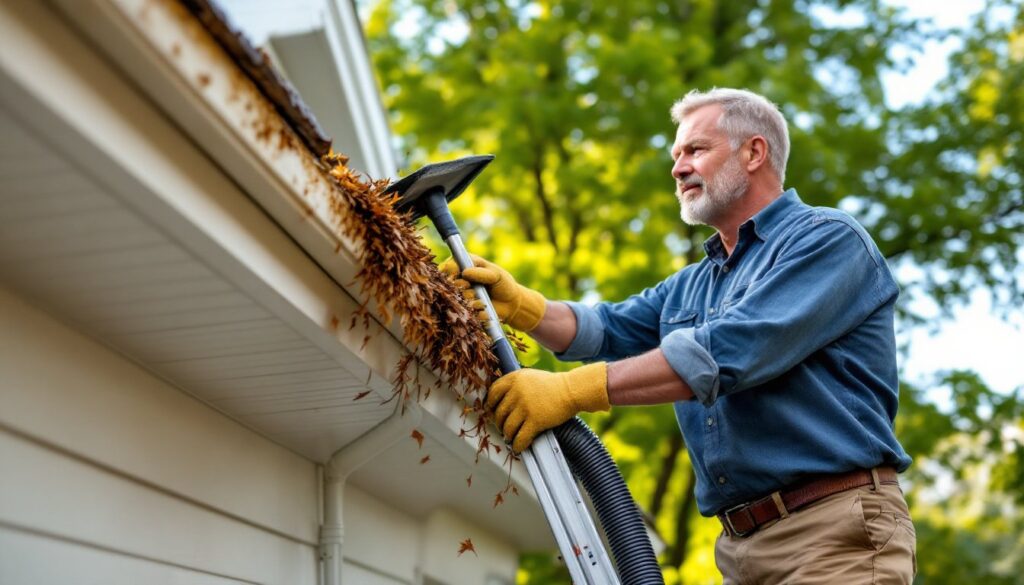
- Wet/dry shop vacuum (optional but saves time: attaches to gutters to suck out debris)
Helpful add-ons:
- Gutter guards or leaf screens (prevent debris accumulation, though they still require occasional cleaning)
- Downspout extensions (ensure water flows 4–6 feet away from the foundation)
- Wire mesh strainers for downspout openings (catch debris before it clogs the downspout)
Step-by-Step Gutter Cleaning Process
Safety Preparation and Setup
Before touching a ladder, do this. Choose a calm, dry day, never clean gutters during rain or on windy days. Wear closed-toe shoes with good traction and avoid running shoes (they slip on wet surfaces). Put on safety glasses and work gloves.
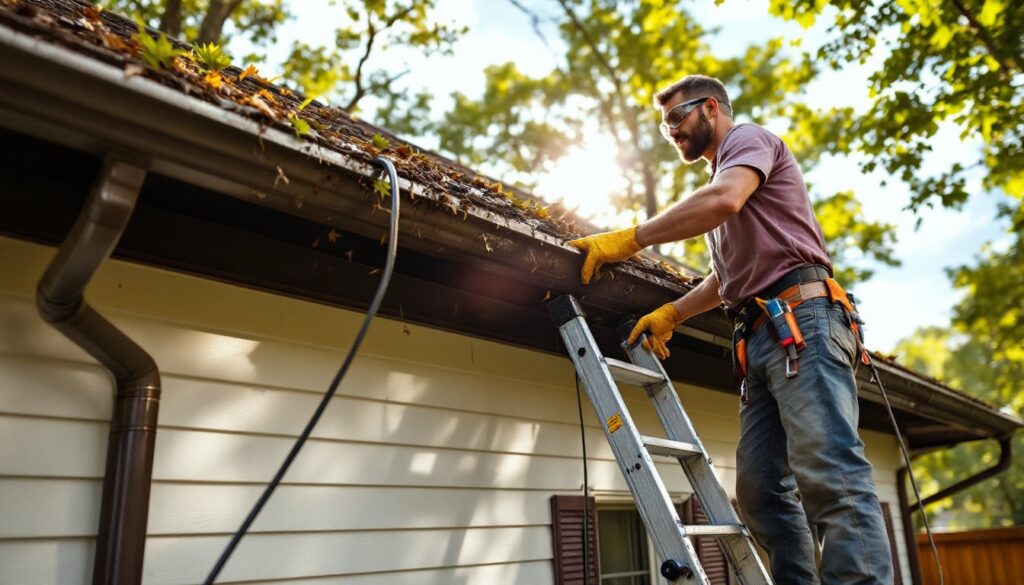
Inspect your ladder for damage: cracked rails, bent rungs, or wobbly feet mean it’s not safe. Set the ladder at a 75-degree angle (the “1-in-4 rule”: for every 4 feet of vertical height, the base sits 1 foot away from the house). Use a ladder stabilizer to prevent the ladder from sliding sideways and keep it from denting the gutter.
Have someone hold the ladder base while you climb, or invest in a safety harness if you’re on a high two-story roof. Don’t lean too far to the sides, move the ladder frequently instead.
Removing Debris and Flushing
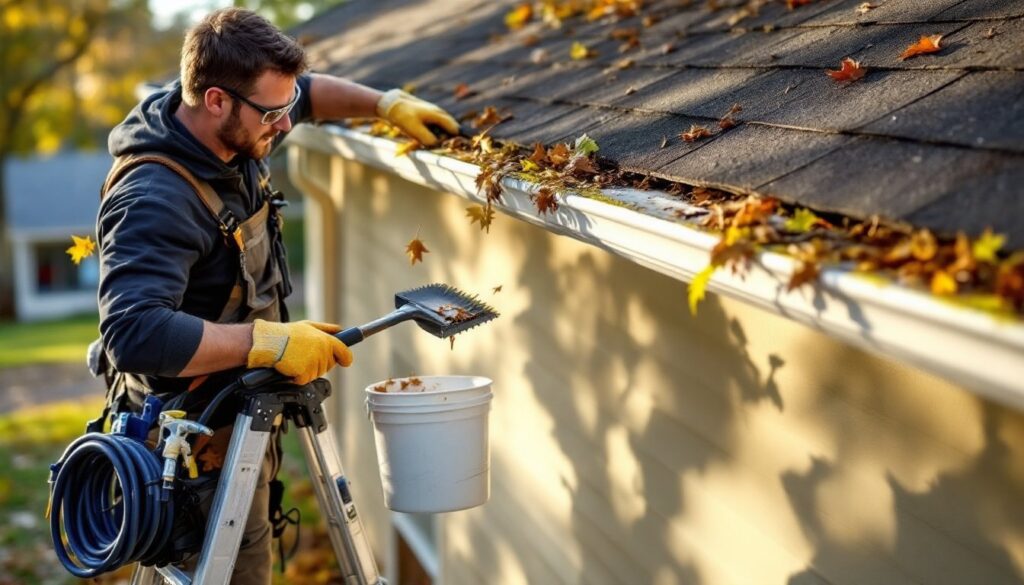
Start at the downspout end and work toward the opposite end. Use your gutter scoop to pull out leaves, twigs, sediment, and compacted debris. Drop the material into your bucket. Don’t rush this step: gutter silt hardens like concrete when wet, so break it apart with your scoop.
Once you’ve scooped the entire gutter run, attach your garden hose to flush the gutter from one end to the downspout. This removes fine particles and reveals any leaks or sagging sections. Watch where the water exits the downspout, it should flow freely and not back up. If water backs up, your downspout may be clogged. Feed the hose into the downspout opening to flush it clear, or use a plumbing snake if clogs persist.
After flushing, do a visual inspection. Look for cracks, holes, rust (on metal gutters), separation from the fascia, or sagging sections. Minor leaks can be sealed with gutter caulk (silicone or acrylic). Sagging gutters indicate fastener failure or insufficient slope and may require professional re-hanging.
Long Island Climate Considerations for Gutter Maintenance
Long Island is not a fire-and-forget gutter zone. The region’s clay and sandy soil, combined with heavy seasonal rain, means gutters must perform flawlessly. If you live in a flood-prone area or near wetlands, you face additional risk if gutters fail during heavy downpours.
Coastal properties (Nassau and Suffolk counties near the Sound or Ocean) deal with salt spray corrosion year-round. Metal gutters rust faster: vinyl gutters become brittle and discolor. Consider upgrading to galvanized steel or copper gutters if yours are aging. Copper is expensive but lasts 50+ years and develops a protective patina. Aluminum gutters are affordable but less corrosion-resistant in coastal zones.
Autumn leaf drop is particularly aggressive in Long Island’s wooded neighborhoods. Oak, maple, and birch trees shed billions of leaves. If you have mature trees overhanging your roof, plan to clean gutters three times a year: once in early fall, once in late fall after most leaves drop, and once in spring. Installing gutter guards or leaf screens reduces cleaning frequency, though they require occasional maintenance themselves. Professional gutter cleaning services can be scheduled seasonally if DIY isn’t your preference.
Winter ice dams are another Long Island concern. When snow melts on your roof and refreezes at the gutter line, ice backs water under shingles. Clean gutters allow water to drain instead of pooling. Ensure your downspouts direct water away from the foundation, at least 4–6 feet is ideal.
When to Call a Professional vs. DIY Approach
Gutter cleaning is DIY-friendly if your house is one story, you’re comfortable on a ladder, and your gutters are in decent shape. Most homeowners can safely manage this task. But, several situations warrant calling a pro.
Call a professional if:
- Your roof is three or more stories high (fall risk is significant: insurance may not cover self-inflicted injuries)
- You’re physically unable to climb a ladder safely
- Your gutters show major damage: large holes, severe rust, or sections completely separated from the fascia
- You discover a rotted fascia board or soffit damage (cosmetic prep work, not gutter cleaning)
- You live in a tree-heavy area with heavy accumulation and limited access
- Local building codes require licensed contractors for roof-related work
If you hire someone, HomeAdvisor and similar platforms let you compare local contractors, read reviews, and get cost estimates. Long Island gutter cleaning runs $150–$300 for a typical single-story home, depending on house size and debris volume. Get quotes from at least two contractors before hiring.
For most two-story homes with moderate debris, DIY saves $100–$200 per cleaning and gives you control over the schedule. If you’re a beginner, start in spring when debris is lighter and conditions are safer. The investment in a good ladder and stabilizer, roughly $150–$250, pays for itself after two professional cleanings.