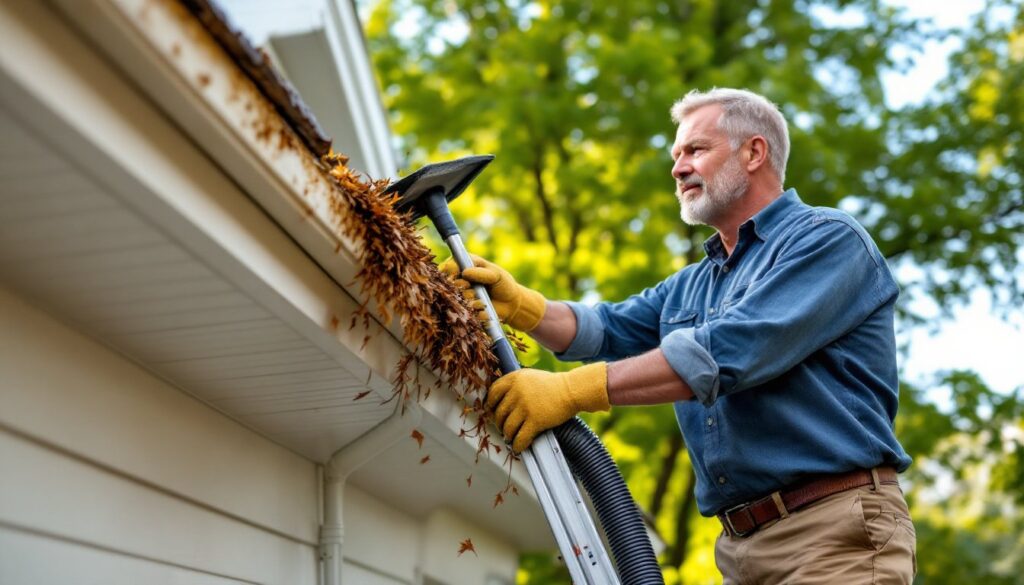
Gutters might not be the sexiest home system to think about, but they’re one of the most important. In Allentown, Pennsylvania, where fall leaves pile up fast and spring rains are relentless, clogged gutters become a serious problem, fast. They can lead to foundation damage, roof leaks, and rotted fascia boards that’ll cost you thousands to fix. The good news? Gutter cleaning is one of the most straightforward DIY projects you can tackle. Whether you’ve never done it before or you’re brushing up on your technique, this guide will walk you through the tools you need, the steps to follow safely, and when it’s time to call in reinforcements.
Table of Contents
ToggleKey Takeaways
- Gutter cleaning in Allentown, PA is essential twice yearly to prevent foundation damage, roof leaks, and costly fascia repairs caused by Allentown’s heavy fall leaves and spring rains.
- Start gutter cleaning with the right tools: an extension ladder, gutter scoop, 5-gallon bucket, work gloves, and safety glasses—plus optional leaf blower for 30–50% faster debris removal.
- Always follow safety protocols: never work alone, avoid overreaching, use a ladder stabilizer, and wait for dry conditions to prevent dangerous falls.
- Clear the downspout opening carefully and flush with a garden hose to confirm proper drainage, addressing clogs with a plumbing auger if water backs up.
- Call a professional gutter cleaning service ($150–$500) if your roof pitch exceeds 8:12, you have second-story gutters, or you’re uncomfortable working at height.
- Maintain gutters year-round by cleaning in spring and fall, monitoring for ice dams in winter, and installing gutter guards or downspout extensions for long-term protection.
Why Gutter Cleaning Is Essential for Your Allentown Home
Your gutters are essentially your home’s drainage system. They catch water running off the roof and direct it away from your foundation, siding, and landscaping. When gutters get clogged with leaves, silt, and debris, water backs up and spills over the edge, or worse, seeps into joints and seams it was never meant to touch.
In Allentown, this isn’t just a spring and fall problem. Winter thaw cycles can refreeze debris in gutters, creating ice dams that force water under your shingles. Summer storms bring heavy volume, and if your gutters are full, that water has nowhere to go except down your walls. Over time, backed-up water softens fascia boards (the trim behind the gutters), rots them out, and compromises the structural integrity of your eaves.
Clean gutters also protect your landscaping and prevent foundation settling issues. Water pooling near your foundation can lead to cracks, basement flooding, and expensive repairs. Regular cleaning, typically twice a year, once in spring and once in fall, prevents these headaches.
Common Gutter Problems in Pennsylvania’s Climate
Allentown sits in a region with four distinct seasons, and each one brings specific gutter challenges. Fall is the obvious culprit: oak and maple leaves pack the gutters faster than almost anywhere else in the country. By late October, you’ve got a real mess.
Winter isn’t kind either. Snow melt in late February and March can refreeze at night, creating ice dams that block drainage. When ice forms inside a clogged gutter, water backs up even higher and finds cracks in your roof system. Spring brings heavy rain, and if gutters are still packed from winter, you get overflow and potential water intrusion.
Summer thunderstorms are another factor. Allentown’s location means it gets soaked several times a season. Debris from spring growth, small branches, pollen, and granules from aging shingles, clogs gutters just as new storms roll in. Finally, pine needles (if you have conifers nearby) are notorious for creating a mat that holds moisture and blocks flow even when you think the gutter is clean. They’re smaller than leaves and slip right through many gutter guards.
Best Tools and Materials for DIY Gutter Cleaning
You don’t need many tools to clean gutters, but the right ones make a real difference in speed and safety.
Essential Tools:
- Extension ladder (20–28 feet for most single-story homes: 28–40 feet for two-story). Invest in a quality one with a level indicator and standoff brackets.
- Gutter scoop (plastic or aluminum). A specialized scoop is worth the $10–15. Drywall scrapers and small shovels are alternatives, but a gutter scoop’s curve matches the gutter profile and works faster.
- 5-gallon bucket with a hook that attaches to your ladder. This beats running back and forth with full handfuls of debris.
- Work gloves (nitrile or heavy-duty leather). Gutters hold wet, decomposing leaves and can hide sharp metal edges or nails.
- Safety glasses or goggles. Debris falls as you work, and bits of grit fly up easily.
- Leaf blower or shop vac with a blower attachment (optional but speeds up the process by 30–50%). This works great for dry debris: skip it if gutters are soaked.
Helpful Additions:
- Gutter brush (soft bristles) for final cleaning and to loosen embedded silt.
- Spray nozzle or small hose to flush remaining debris and check for proper water flow. High-pressure washers are overkill and can damage gutters.
- Ladder stabilizer or standoff to keep the ladder from leaning directly against the gutter edge (prevents bending or crushing gutters).
Many homeowners find that a combination of a gutter scoop and a leaf blower works best. Start by scooping out large debris, then use the blower on low speed to move fine silt toward downspouts. This keeps your bucket from getting waterlogged.
Step-by-Step Guide to Cleaning Your Gutters Safely
Gutter cleaning is straightforward, but it demands respect for heights and attention to detail. Here’s the process that works:
-
Set up your ladder on level ground. Place it at an angle (about 75 degrees from the ground) directly below the gutter section you’re starting with. Never extend to the side further than your arm can reach comfortably: you want to stay centered over the ladder rails. If you can’t reach a section safely, move the ladder, don’t lean.
-
Attach your bucket to the ladder using a clip or hook, then climb up with your scoop and gloves on. Start at one end (ideally the end nearest a downspout) and work methodically along the gutter.
-
Scoop out debris in handfuls. Push the scoop along the bottom of the gutter, breaking up matted leaves and silt. Dump each scoop into your bucket. This is the bulk of the work and takes most of your time.
-
Clear the downspout opening. Once the main gutter is clear, pay special attention to the opening where water enters the downspout. This is where clogs form. Remove any leaves or debris blocking the inlet.
-
Flush with water to confirm proper drainage. Use a garden hose with a standard nozzle. Water should flow smoothly through the gutter toward the downspout and out the bottom. If it pools or drains slowly, you likely have a clog in the downspout itself (see troubleshooting below).
-
Check downspout flow by running water into the gutter and watching it exit the downspout. If water backs up at the downspout inlet or dribbles out slowly, the downspout is clogged. You may need to remove the downspout elbow or use a plumbing snake to clear it.
-
Repeat for all sections. Move your ladder as needed and work around the entire perimeter.
Downspout Clog Fix: If water won’t flow through a downspout, try blowing it out with a leaf blower (put the blower on reverse or use it as a vacuum to pull from the bottom). If that doesn’t work, disconnect the downspout at the elbows and use a plumbing auger or compressed air to dislodge the clog. Never use a high-pressure washer on aluminum gutters or downspouts, it can bend them.
Safety Precautions Before You Start
Falls from ladders are among the most common home injuries. Gutter cleaning isn’t inherently dangerous, but complacency kills. Always wear safety glasses and work gloves. Gutters can hide rusty nails, sharp metal edges, or animal droppings.
Never work alone on a ladder. Have someone spotting you, holding the ladder steady and ready to call for help if needed. If you live alone, call a friend or family member to be present. It’s worth the small favor.
Never overreach. If you can’t reach a section from your current ladder position without stretching your core, move the ladder. Falling while reaching is how accidents happen. Your arm’s length plus a foot is your safe reach zone: anything beyond that is a fall risk.
Wear closed-toe shoes with grip. Wet ladder rungs are slippery. Avoid flip-flops, sandals, or leather-soled shoes that slide.
Don’t work in wet conditions. Wait until gutters have dried after rain. Wet debris is heavier, gutters are slippery, and your footing is compromised.
Use a ladder stabilizer or standoff bracket to keep the ladder from bending your gutters. The bracket also keeps the ladder further away from the wall, reducing the angle and putting you in a more stable position.
Don’t use a stepladder for gutter work. You need an extension ladder for height and stability. A stepladder is unstable at extended height and won’t give you the proper angle or reach.
When to Call a Professional Gutter Cleaner in Allentown
Not every gutter cleaning job is a DIY situation. Know your limits, calling a pro is cheaper than a hospital visit or water damage repair.
Call a professional if:
- Your roof is steeper than 8:12 pitch. Steep roofs mean unstable ladder angles and higher risk. Professional cleaners have safety gear and experience with steep pitches.
- You have a second-story gutter or gutters over 25 feet high. Getting a 32-foot extension ladder positioned safely requires practice and proper equipment. Professionals also have harnesses and tie-off points.
- You have existing gutter damage. Leaks, sagging sections, or separated joints need repair, not just cleaning. A professional can assess and repair as part of the job.
- You have physical limitations. Bad knees, vertigo, or balance issues are legitimate reasons to hire out.
- Your downspouts are clogged or frozen. If your own attempts don’t clear a stubborn clog, a professional has motorized augers and high-pressure tools.
- You’re uncomfortable on a ladder. Honestly, if you’re nervous, you’ll rush and make mistakes. It’s not worth it.
Allentown has many qualified gutter cleaning services. You can find top-rated gutter cleaning pros in Allentown, PA with real customer reviews. Most pros charge $150–$300 for a single-story home and $250–$500 for two-story, depending on gutter length and debris load. HomeAdvisor and ImproveNet both offer cost estimators and contractor matching if you want quotes from multiple local services. Get at least two estimates and ask what’s included, some charge extra for downspout cleaning or clogged downspout removal.
Maintaining Your Gutters Year-Round
Cleaning your gutters twice a year is the baseline, but a few smart habits prevent problems between cleanings.
Spring (April–May): After winter melt and spring growth, gutters fill up fast. Clean them after the trees have fully leafed out and you’re past the heavy rain season. This prevents summer backups.
Fall (September–October): Don’t wait until November when leaves are at their peak. Clean gutters in early October, then again in late November after most leaves have fallen. This two-pass approach keeps you ahead of the mess.
Winter: In Allentown, monitor gutters after heavy snow or ice storms. If you see icicles forming along the gutter edge or notice water staining on your siding, an ice dam is forming. You may need to break up ice or improve attic ventilation to prevent future dams. This is a sign your gutter system isn’t draining properly, often because of debris trapped beneath ice.
Year-round: Walk around your home every few weeks and look for signs of trouble. Sagging gutters, water stains on fascia, or foundation-area pooling all suggest problems. Caught early, they’re easy to fix. Ignored, they become expensive.
Gutter guards: If you’re tired of cleaning twice a year, consider gutter guards. Mesh screens and reverse-curve systems reduce debris by 60–80% but aren’t perfect. They still need occasional maintenance (especially if you have pine trees), and they can add $8–$15 per linear foot. They’re worth it if you have a lot of trees or a steep roof you don’t want to climb.
Downspout extensions: Make sure downspout water discharges at least 4–6 feet from your foundation. If water is pooling near your basement or foundation, add an extension or splash block to redirect it.