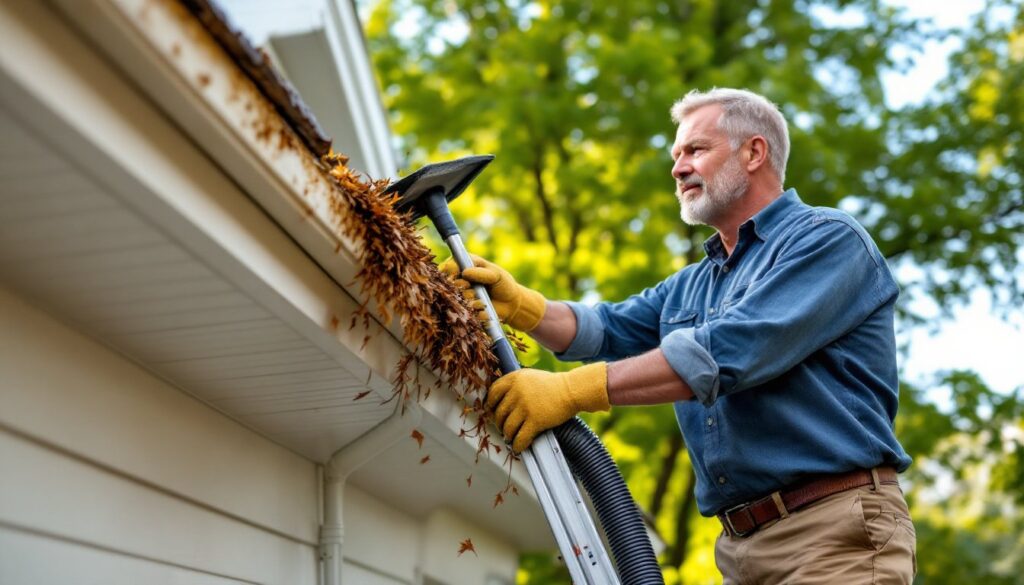
Virginia Beach’s humid subtropical climate, with heavy summer rains, tropical storm season, and abundant oak pollen, means gutters take a beating. Neglecting gutter cleaning isn’t just an aesthetic issue: clogged gutters cause water damage to fascia boards, soffit, siding, and foundations. This guide walks homeowners through a safe, methodical gutter cleaning process tailored to Virginia Beach’s specific challenges, from the tools you’ll need to recognizing when it’s time to call a professional.
Table of Contents
ToggleKey Takeaways
- Virginia Beach’s humid subtropical climate with heavy rains, tropical storms, and high pollen counts accelerates gutter clogging, requiring twice-yearly gutter cleaning maintenance to prevent water damage and mold growth.
- Clogged gutters overflow water against your foundation, causing foundation cracks, basement seeping, roof shingle rot, and fascia decay that can cost $15–$30+ per linear foot to repair.
- Gutter cleaning requires proper safety setup: use a fiberglass ladder rated for 250 lbs, ladder stabilizer, safety goggles, work gloves, and a dust mask; never work alone or on wet surfaces.
- Clear gutters methodically by removing bulk debris with a hand scoop, then flushing with a garden hose to remove silt and pollen, checking downspouts for clogs and clearing blockages with water pressure or a plumbing auger.
- Hire a professional gutter cleaner for two-story homes, if you’re over 65 or have mobility issues, or if gutters show sagging, separated seams, rust, or structural failure, typically costing $150–$500 depending on home size.
- Twice-yearly gutter cleaning is one of the highest-return home maintenance investments, preventing costly damage to your foundation, siding, and roof while extending the lifespan of exterior components.
Why Regular Gutter Cleaning Matters in Virginia Beach’s Climate
Virginia Beach residents deal with environmental factors that accelerate gutter clogging. The area’s high pollen count, especially during spring, combines with leaves from water oaks and cypress trees to create a thick, sticky debris layer in gutters. Add to that the region’s hurricane and tropical storm season, peak activity from August to October, and gutters can fill faster than most homeowners realize.
Clogged gutters don’t drain water properly, leading to overflow that pools against your foundation. Over time, this causes cracks, basement seeping, and costly foundation repairs. Water also backs up under roof shingles, rotting the plywood decking beneath. Fascia boards, the wooden trim that sits below the edge of the roof, absorb standing water and decay from the inside out. Replacing a rotted fascia board typically runs $15–$30 per linear foot, plus labor.
Exterior caulking and paint fail prematurely when water continuously drips down siding. In Virginia Beach’s climate, mold and mildew growth accelerates in shaded areas where gutters overflow, creating health concerns and aesthetic damage. Most professionals recommend gutter cleaning twice per year: once in late fall after leaves drop, and again in early spring before the heaviest rains arrive. Homes with significant tree coverage may need cleaning as often as four times yearly.
Tools and Materials You’ll Need
Proper tools make the job safer and faster. Here’s what every homeowner should gather before starting:
Ladder and Safety Equipment:
- An extension ladder rated for 250 lbs minimum (fiberglass is safer than aluminum near electrical lines)
- A ladder stabilizer or standoff to keep the ladder 1 foot away from the gutter edge
- Safety goggles to protect against debris and splashing water
- Work gloves, heavy-duty nitrile or leather, not cloth
- A dust mask or respirator if allergies are severe: mold and mold spores concentrate in gutters
Debris Removal Tools:
- A hand scoop (plastic gutter scoop or repurposed putty knife)
- A 5-gallon bucket for debris: hang it from the ladder with a rope to avoid climbing down constantly
- A leaf blower with reverse mode or a gutter vacuum attachment (optional but efficient)
Flushing and Inspection:
- A garden hose with a spray nozzle set to stream mode
- A headlamp or clip light for downspout inspection, you’ll be looking into dark openings
Optional but Recommended:
- Gutter guards or strainers if you want to reduce future maintenance
- A wet/dry shop vacuum if you’re dealing with compacted silt
Total cost for basic tools is typically $50–$150 if buying new. Most homeowners already own a ladder and gloves, so the incremental expense is modest.
How to Clean Your Gutters Safely and Effectively
Setting Up and Taking Safety Precautions
Before you climb, assess the weather. Never clean gutters in rain, high wind, or after rain when surfaces are slippery. Check your ladder, make sure all joints are tight and no rungs are cracked. Set up on level ground: use shims or adjust the base to keep it stable, not tilted or rocking.
Place the ladder at a 75-degree angle, roughly one foot away from the wall for every four feet of height. Use a ladder stabilizer or standoff arm to push the ladder 1 foot away from the gutter: this prevents the ladder from slipping sideways and keeps your body away from the gutter lip during climbing.
Wear all designated PPE: goggles, gloves, and a dust mask. Tell someone you’re working at height so they know where you are. Never work alone on a ladder, especially in a two-story scenario.
Removing Debris and Flushing the System
Start from the downspout end of the gutter section and work toward the opposite end. Use your gutter scoop to manually remove the bulk of leaves, twigs, and silt. Work slowly: compacted debris requires more force. Deposit debris into your bucket.
Once the bulk debris is out, spray the gutter section with your hose set to a steady stream. Start near the downspout and flush toward the far end to clear remaining silt, pollen, and dust. You’ll see the water flow dark, then gradually clear. Keep flushing until the water runs clean.
Now test the downspout. Have someone at ground level observe water exiting the downspout’s bottom end, or position yourself to watch. The water should flow freely. If it backs up or dribbles, the downspout has a clog, typically leaves compacted inside the elbow or lower section.
To clear a downspout clog, try reversing the flow: insert your hose into the downspout from the top and let water pressure dislodge the blockage. If that fails, use a plumbing auger (a hand-crank snake) to break apart the clog, or disassemble the downspout sections if they’re fastened with screws or band straps. In Virginia Beach’s humid climate, downspout interiors often collect mold and silt: a light spray of bleach solution (1 part bleach to 10 parts water) can kill mold, though rinse thoroughly afterward.
Repeat this process for each gutter section around your home. Gutters on the north side of your house (receiving less sun) often trap more debris and mold, so expect heavier cleaning there.
When to Call a Professional in Virginia Beach
Some situations demand professional attention. If your gutters are more than two stories up, climbing becomes riskier, most fall injuries occur on ladders at that height. If you’re over 65, have balance issues, or mobility limitations, hire help. There’s no medal for DIY heroics: a professional gutter cleaning typically costs $150–$300 for a one-story home and $300–$500 for two stories in Virginia Beach, depending on home size and debris volume.
Call a professional if you suspect structural issues: sagging gutters, separated seams, or significant rust in steel gutters. These indicate the gutter system itself is failing, not just dirty. Similarly, if downspouts are cracked, corroded, or missing, professionals can assess whether repairs or replacement is needed.
For major gutter replacements, when aluminum or steel gutters are beyond repair, seek licensed contractors familiar with Virginia Building Code requirements for proper pitch (at least 1/8 inch per 10 feet of run) and fastener spacing. Poor pitch leads to standing water and mold growth even after cleaning.
Virginial Beach has many qualified gutter professionals. Top-rated local gutter cleaners can be found through licensed directories, and services like HomeAdvisor allow you to get instant quotes from vetted contractors. For broader home improvement advice, Bob Vila’s contractor recommendations also cover gutter work and other projects, giving you a reference point for what to expect from professional service.
Conclusion
Gutter cleaning isn’t glamorous, but it’s one of the highest-ROI maintenance tasks a homeowner can perform. Twice-yearly cleaning keeps water flowing away from your home, prevents mold, and extends the life of siding, fascia, and your foundation. For most homeowners, a weekend morning with a ladder, scoop, and hose solves the problem. When climbing height, age, or structural issues arise, hiring a professional is a smart investment in your home’s longevity.