Tampa’s subtropical climate, with heavy afternoon thunderstorms, humidity, and pine trees shedding needles year-round, makes gutter cleaning a necessity, not a luxury. Clogged gutters become a magnet for water damage, foundation problems, and pest nests faster than in drier climates. Most Tampa homeowners need to clean their gutters at least twice a year, sometimes three times if they’re surrounded by oak or pine trees. This guide walks you through the entire process: what tools you actually need, safety steps that matter, and when to recognize it’s time to call in a professional. You’ll have clean gutters and the confidence to tackle this project without costly mistakes.
Table of Contents
ToggleKey Takeaways
- Gutter cleaning in Tampa should occur at least twice yearly due to heavy summer rains, humidity, and year-round tree debris that accelerate clogging and water damage.
- Proper safety equipment—including a stable ladder, stabilizer bar, work gloves, and a helper—is essential to prevent injuries during gutter cleaning projects.
- Clogged gutters lead to wood rot, foundation settling, pest infestations, and costly roof damage when water backs up and seeps under shingles.
- Start gutter cleaning at the downspout end, scoop out debris, flush with low-pressure water, and always clear the downspout first to ensure proper water flow.
- Call a professional gutter cleaner if your roof exceeds a 6:12 pitch, your home is two stories or taller, or if you encounter structural damage, sagging sections, or persistent clogs.
- Check your gutters immediately after heavy storms and during hurricane season (June–November) in Tampa, as tree debris can overwhelm even recently cleaned gutters.
Why Regular Gutter Cleaning Matters in Tampa’s Climate
Tampa’s weather is tough on gutters. The combination of heavy summer rains, constant humidity, and year-round tree debris creates the perfect storm for blockages. When gutters clog, water backs up and spills over the edge, soaking your fascia boards, soffit, and foundation. Over time, this leads to wood rot, foundation settling, and expensive repairs.
The real problem isn’t just rain, it’s the sneaky stuff. Algae thrives in Tampa’s humid climate and builds up inside gutters, constricting water flow. Pine needles and oak leaves decompose into a sludgy paste that hardens and becomes difficult to remove manually. Mosquitoes and roaches breed in standing water trapped in clogged gutters, bringing pests right to your roofline.
Clean gutters also extend the life of your roof. When water dams up behind a clogged gutter, it seeps under shingles and damages the decking underneath. Regular cleaning, ideally every spring and fall, plus after major storms, prevents thousands in repair bills.
What You’ll Need: Essential Tools and Safety Gear
Tools and Materials:
• A sturdy aluminum or fiberglass ladder (20 to 24 feet for single-story homes: do not use a step ladder)
• Ladder stabilizer bar or standoff (reduces pressure on gutters and prevents damage)
• Work gloves (nitrile or heavy-duty leather)
• A gutter scoop or small shovel
• A garden hose with adjustable nozzle
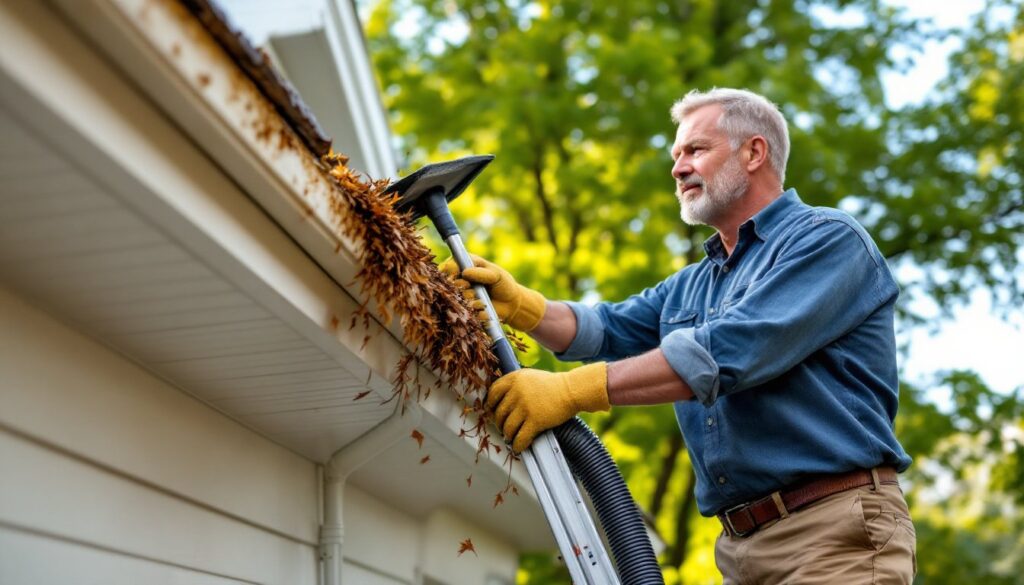
• A wet/dry shop vacuum with extension wand (optional but highly effective)
• A bucket to catch debris or hang from the ladder
• Flashlight or headlamp
• Binoculars (to assess gutters from the ground first)
Safety Precautions Before You Start
Gutter cleaning causes more injuries than most people expect. The ladder is your biggest risk, followed by falls from reaching too far or losing balance on wet surfaces.
Wear impact-rated safety glasses or goggles, algae, bird droppings, and wasp nests are real hazards. Put on cut-resistant work gloves because metal gutter edges are sharp, and you may encounter rusty fasteners. Use closed-toe shoes with good grip, no flip-flops or worn-out sneakers on a ladder.
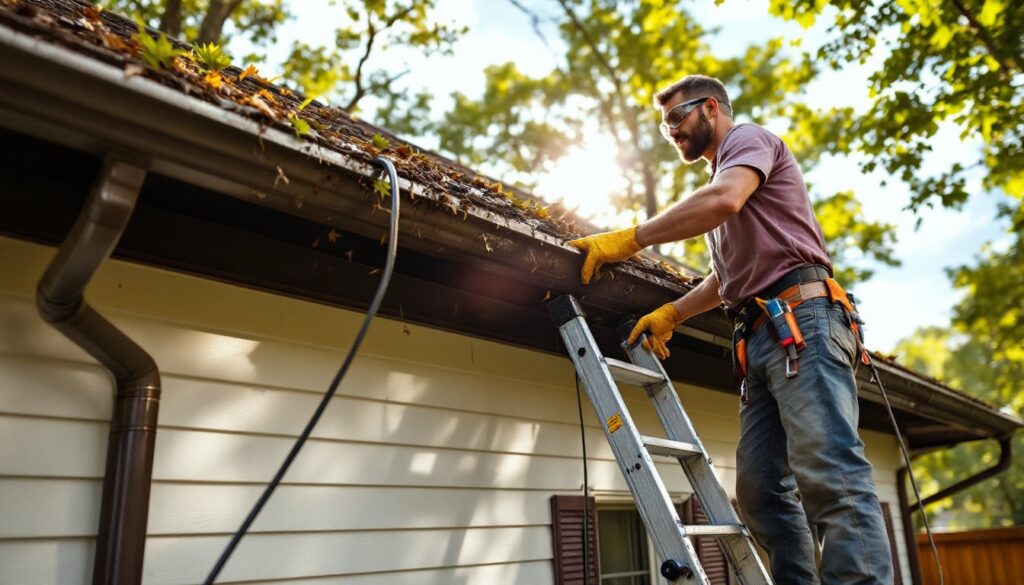
Set your ladder on level ground, not on dirt or soft mulch. Use a ladder stabilizer or standoff bracket to keep the ladder from leaning directly against the gutter, which can bend the gutter or cause it to pull away from the house. Never extend yourself more than an arm’s length to either side while on the ladder: move the ladder instead. If you feel unsafe at any point, stop and call a professional.
Check the weather before starting. Don’t climb a ladder during or after rain when surfaces are slick, or on windy days. Have a second person spot you and hold the ladder base for stability.
Step-by-Step Guide to Cleaning Your Gutters
1. Scout from the ground. Use binoculars to look for obvious blockages, sagging sections, or gaps where gutters have pulled away from the house. This preview tells you whether you’re dealing with light leaf debris or a heavy sludge situation.
2. Position your ladder safely. Place it a few feet away from the section you’re cleaning, not directly under it. Secure the base and use a stabilizer bar. Have a helper hold the ladder or stand nearby.
3. Start at the downspout end. Work toward the opposite end of the gutter run. As you remove debris, you’re naturally funneling it toward the downspout. A clogged downspout is just as bad as a clogged gutter, so clear the downspout opening first by removing any leaves or moss blocking it.
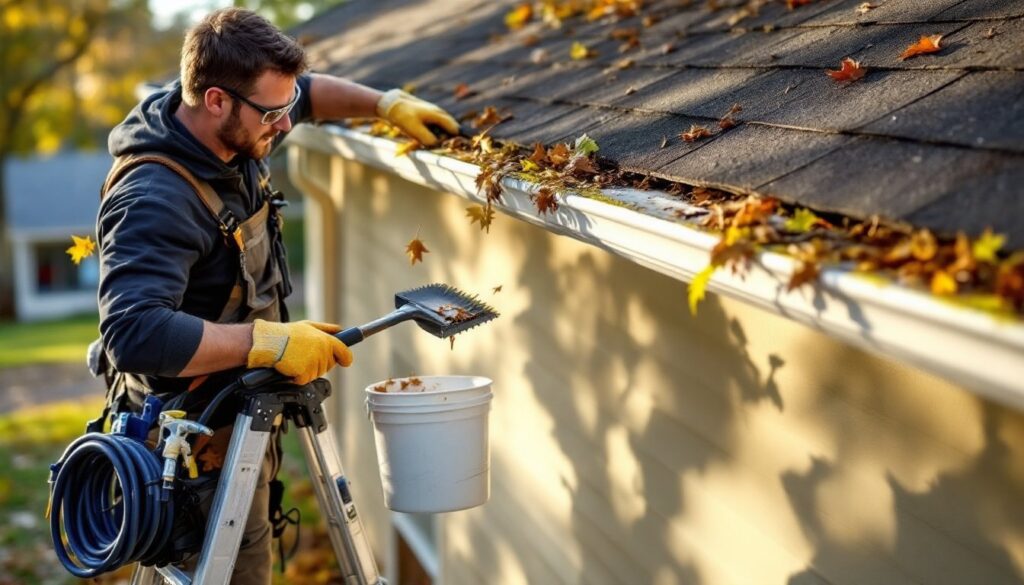
4. Scoop out debris. Use a gutter scoop or small shovel to pull out leaves, twigs, and sludge. Work in sections, moving the ladder as needed. Drop debris into a bucket hanging from the ladder or onto a tarp below. Don’t throw it straight down, you’ll want to contain it for cleanup.
5. Flush with water. Once the bulk of debris is out, use your garden hose at low pressure to rinse the gutter. Start from the far end and work toward the downspout. This clears algae, fine sediment, and anything the scoop missed. If water backs up, there’s a downspout blockage, see step 7.
6. Inspect and note repairs. As you clean, look for standing water, cracks, rust, or sagging sections. Note any damaged fascia boards or areas where the gutter is pulling away. These indicate needed repairs that you can tackle later or schedule with a contractor.
7. Clear the downspout. If water from the gutter doesn’t flow freely into the downspout, the downspout is clogged. Try flushing it with a hose at medium pressure from the top. If that doesn’t work, you may need to disconnect the downspout or use a plumbing snake. This is a good reason to keep gutter and downspout cleaning supplies on hand year-round.
Signs Your Gutters Need Immediate Cleaning
Don’t wait until your next scheduled cleaning if you notice any of these red flags:
• Water spilling over the gutter edge during rain or while you’re hosing them down indicates a blockage downstream.
• Sagging gutters mean they’re holding water weight they shouldn’t be carrying. This stresses fasteners and the fascia board.
• Visible algae or moss buildup, especially on the underside, shows organic growth that’ll only get worse in Tampa’s humidity.
• Granules or shingle debris in the gutter suggest roof wear, and you should inspect the roof for damaged shingles.
• Pest activity, mosquitoes, wasps, or roaches near the gutters, means standing water or organic decay is creating habitat.
• Water stains on your fascia or soffit indicate that water has been backing up and spilling for a while. Interior water damage may already be happening.
• Gutter separation where the gutter is pulling away from the house means fasteners have failed or debris weight has stressed the system. This needs quick attention to prevent more damage.
After a heavy storm, check your gutters the next day. Branches and extra debris can overwhelm even recently cleaned gutters. Tampa’s hurricane season (June through November) can deposit significant tree damage overnight.
When to Call a Professional in Tampa
Some situations demand a licensed contractor or gutter specialist. If your roof is steeper than a 6:12 pitch (meaning the roof rises 6 inches for every 12 inches of run), it’s riskier and slower to clean DIY. If you’re uncomfortable on a ladder, have mobility issues, or your gutters are on a two-story or taller home, hiring is smarter than risking a fall.
If your gutters have structural damage, sagging sections, rust holes, or significant separation from the fascia, cleaning alone won’t fix the problem. You’ll need repair estimates from local contractors through resources like HomeAdvisor or similar platforms to assess whether gutters need reinforcement or replacement.
Downspout clogs that you can’t clear with a hose or basic tools may require professional equipment. A plumber or gutter specialist has motorized drain snakes and water jets that clear stubborn blockages. Leaf guard installation, gutter realignment, and fascia repairs are all jobs for pros. For specific local pricing on gutter cleaning in Tampa, cost estimates vary based on home size and gutter condition, so it’s worth getting quotes.
Conclusion
Gutter cleaning isn’t glamorous, but it’s one of the highest-return home maintenance tasks you can do. Tampa’s climate demands it at least twice yearly. With the right tools, safety mindset, and realistic sense of your own limits, you can keep water flowing and your foundation protected. When in doubt, call a pro, it’s cheaper than foundation repair.